






 Thursday, April 18, 2024
Patkau Design Lab wins RAIC innovation award
Patkau Design Lab in Vancouver is the recipient of the RAIC Research and Innovation in Architecture Award.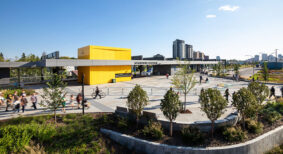 Tuesday, April 16, 2024
National Urban Design winners announced
The 2024 National Urban Design Awards winners have been announced. Twelve winners were selected in six categories. Monday, April 15, 2024
Zeidler reveals new West Broadway hotel designs
Zeidler Architecture has revealed updated designs for 901 West Broadway, a new hotel project by Hallmark Hospitality.
Nick Sully named a 2024 RAIC Fellow
Design unveiled for Calgary’s Arts Commons Venue
Solar installation begins operating at Commonwealth Recreation Centre
New public washrooms break ground in East Village
Henriquez Partners welcomes Toronto principal
Designer chosen for Canada’s first proton therapy facility
 Friday, December 15, 2023
Outdoor lighting principles hail the dark side
Guiding principles for responsible nighttime lighting define how light should be applied, but, first, prospective installers are advised to consider whether lighting is even necessary.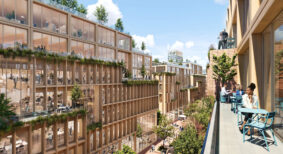 Tuesday, June 27, 2023
World’s largest wood city planned in Sweden
The world's largest wood city will be built in Stockholm, Sweden with construction starting in 2025. Friday, June 9, 2023
Bathroom trends: personal touches
A growing focus on the bathroom as a personal retreat is reflected in emerging trends in bathroom design.
Hot Topics
 Thursday, August 24, 2023
Encouraging return to the office
Motivating people to return to the office was the design challenge for Edit Studios, who was commissioned by Trulioo for its new Vancouver headquarters. Wednesday, July 26, 2023
Old heritage charm for Kitsilano home
Madeleine Design Group was selected to create a family home featuring old heritage charm with antique furnishings and art deco décor.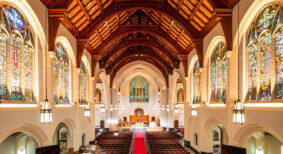 Friday, May 26, 2023
Preserving a Vancouver architectural landmark
The St Andrew's-Wesley United Church is a Vancouver landmark that opened its doors in 1933.
Most Read
 Tuesday, March 19, 2024
Designer chosen for Canada’s first proton therapy facility
Stantec is designing the Ben Stelter Proton Facility and Neuroscience Centre of Excellence in Edmonton, Canada’s first cancer care facility offering proton therapy. Thursday, February 15, 2024
Team selected for CSRC at new St. Paul’s Hospital
Providence Health Care has selected Diamond Schmitt Architects and Kirsten Reite Architecture for the Clinical Support and Research Centre (CSRC). Wednesday, January 3, 2024
Architects awarded contract for CRA facility in St. John’s
The federal government recently acquired land in St. John's, Newfoundland and Labrador, to build the Canada Revenue Agency's new National Verification and Collections Centre and Tax Services Office.
